
Searching Polk County Civil Dockets
The statewide entry point for a Polk civil docket is Minnesota Court Records Online. It's known as MCRO. Its Case Search tool takes a person or business name. It also accepts a full case number, a citation number, or attorney information. Searching by name? Select Civil, pick County instead of Statewide, and choose Polk. A person search requires a last name. It needs a first name too. The portal also offers a Sounds Like option. Date-filed and status filters narrow results further.
The detailed record appears as Case Details/Register of Actions. Treat it as a public lookup layer, not a certified record. The case number is the cleanest route when you have it. Otherwise, start with the strongest identifier you know. Then check the court, filing date, category, and public party roles before opening a record. For a known Polk file, the separate Document Search pulls up eligible public documents.
- Open Case Search and choose Name or Case Number based on the information available.
- For a name search, select the Civil category and the Polk County location filter.
- Check the case number, public party roles, filing date, and court before selecting a result.
- Open Case Details/Register of Actions to review filings, orders, settings, and public documents.
- Use Polk Court Administration, a courthouse terminal, or a copy request if the online record is not enough.
Polk Civil Records Begin in District Court
Civil records for the county live in one place: Polk County District Court. Minnesota runs a unified district-court administration. Civil, criminal, family, juvenile, probate, mental-health, conciliation, traffic, and ordinance records for Polk all sit in that single system. The county has no separate municipal or justice-court civil docket. A case tied to a Polk city still produces the same district-court record.
MCRO, court administration, and the courthouse public terminal are simply different doors into the same court system. The portal shows eligible public information. The terminal can display a fuller public view. Court Administration handles certified copies. It also keeps locally stored paper records and answers questions about any online access limit. Federal civil litigation stands apart from the Polk district-court docket. It stays in the federal court system. For detail on the court's case-management setup, MNCIS integration information documents that environment.
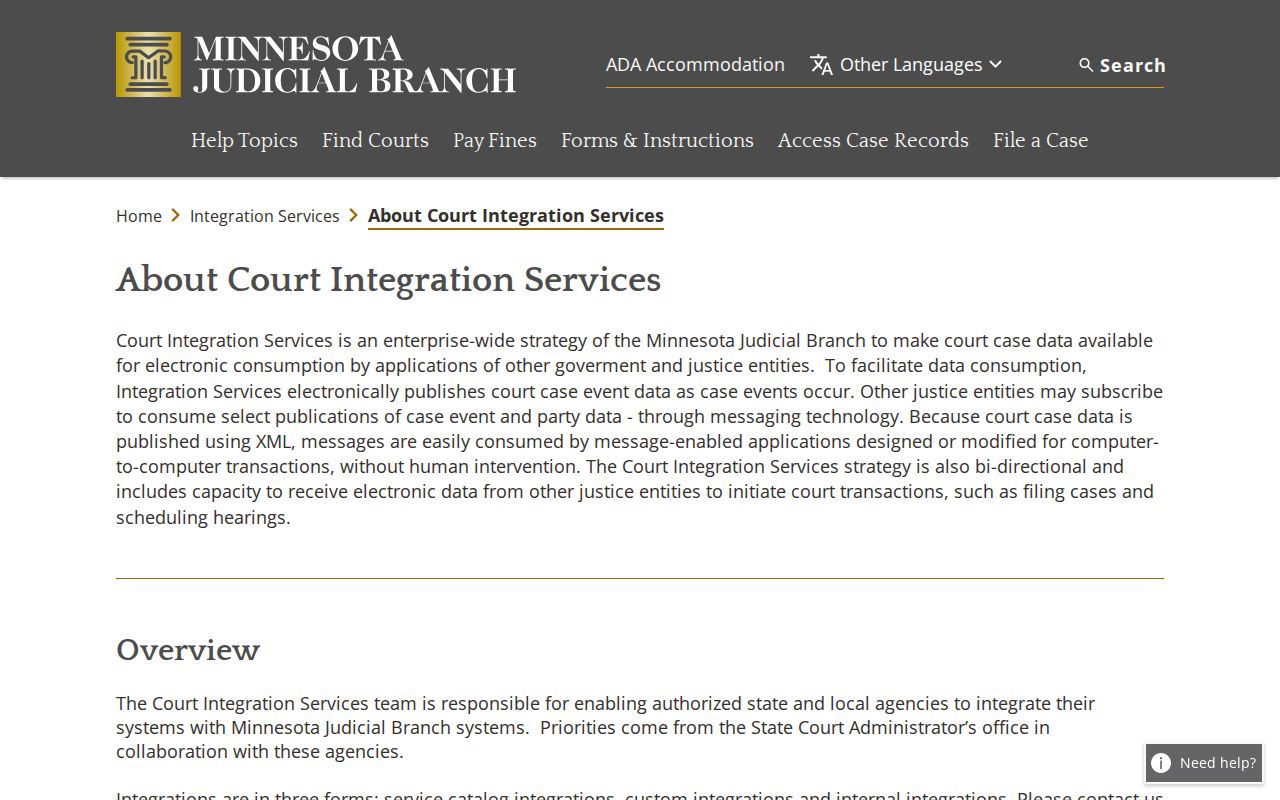
Think of it in layers: MCRO is the eligible public-access layer, MNCIS/Odyssey supports court management, and eFS supports filing and service.
Inside a Polk County Civil Docket
Open a Polk civil Case Details/Register of Actions record. You may find the file number, civil category, filing date, court location, public party roles, attorneys, dated register events, motions and orders, hearing dates, and a document index. The record can also carry judgment or disposition information. It may hold monetary or satisfaction details where applicable, appeal references, and eligible public documents. One caution. The format 60-CV-23-1233 is a file-number example only, not a live search result.
| Parties | Public plaintiff, defendant, petitioner, or respondent roles where remotely available. |
|---|---|
| Register events | Dated filings, motion activity, orders, and court events arranged in a chronological record. |
| Hearing setting | A listed event date or type, which must be checked against the latest notice or court calendar. |
| Document index | References to case documents; remote availability depends on the category, date, and access rule. |
| Judgment information | A court entry or status, not a guarantee that a payment has been collected or a complete financial picture. |
Read the register as a sequence of events. A motion is just a request for a ruling. An order is the court's actual direction or ruling. A judgment goes further and stands as a final enforceable decision or money determination. So the entry plus its related order carry the real meaning; a title by itself never settles the outcome.
Polk 60-CV Civil File Pattern
Polk state-court file numbers begin with the county prefix 60. In a civil example, CV marks the category. Then comes the filing year and the sequence number. The public appellate-style reference 60-CV-23-1233 shows the format without naming any private party. Copy a complete number straight from a filed notice or order. Don't guess at missing digits.
Filing works through a separate channel. Minnesota eFile and eServe, called eFS, is a filing and service system. It is not the public docket. Attorneys, agencies, and guardians ad litem must use it under the statewide mandate. Self-represented litigants may opt in. Even then, a document filed through eFS does not automatically appear in MCRO. The filing's security level and remote-access rules still apply. Minnesota eFile and eServe is the official source for the Polk civil docket filing interface.
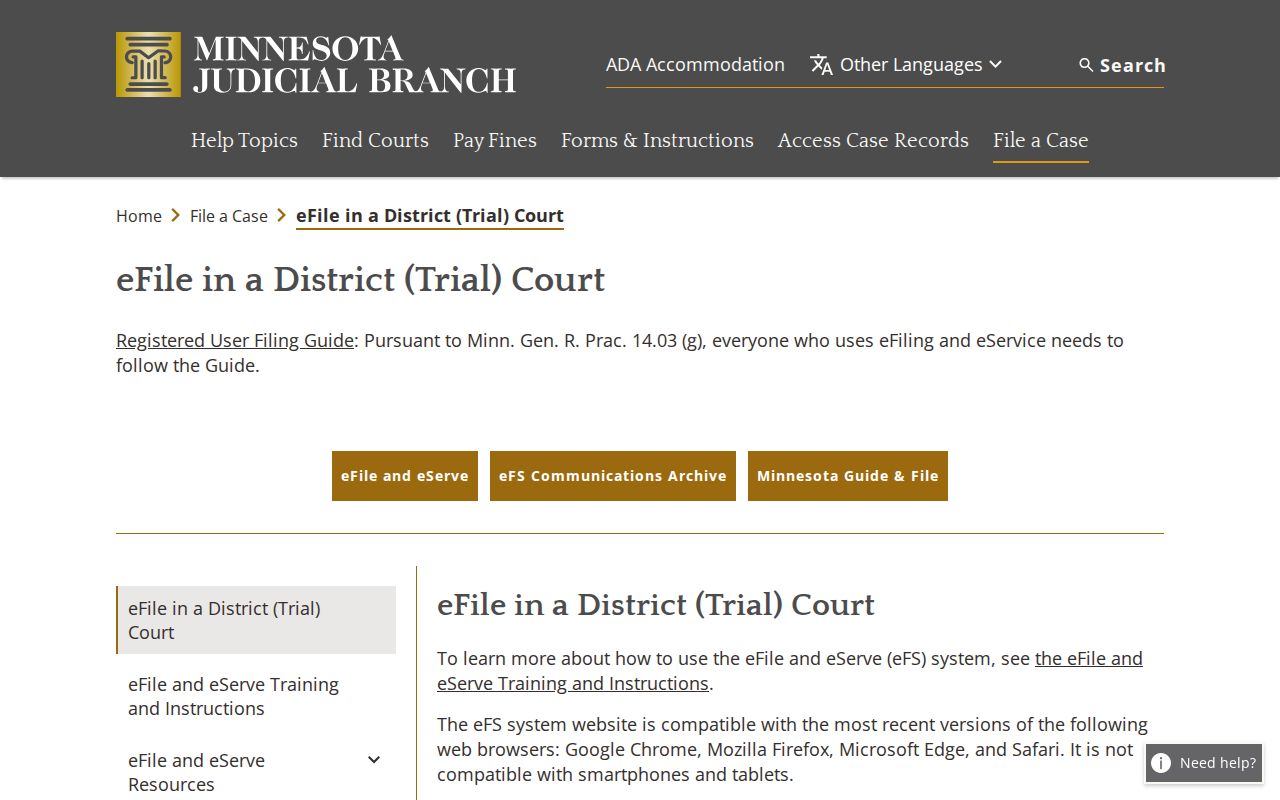
The filing screen makes the divide plain: submitting a civil document and viewing the public Register of Actions are two different steps.
Civil Case Types on the Docket
Civil work on the Polk docket spans general civil matters. It also covers conciliation claims and other civil proceedings kept by the District Court. Family, probate, guardianship, conservatorship, and mental-health matters are district-court work too. Their document access rules can differ substantially. They may stray far from ordinary civil cases. A type label helps you locate the file. It does not tell you which documents are available online.
| Polk court route | Record focus | Public-search caution |
|---|---|---|
| General civil | Filings, motions, orders, hearings, and judgment activity. | Document visibility depends on date, category, and remote-access rules. |
| Conciliation Court | Qualifying civil claims handled within the district-court system. | A judgment does not make the court responsible for collection. |
| Family or petition-based matters | Orders, notices, and docket events where public. | Remote access can be more limited than access at the courthouse. |
The state local-ordinances resource confirms that city, county, and township ordinance cases run through the district-court system. Don't mistake that civic route for a separate municipal civil docket.
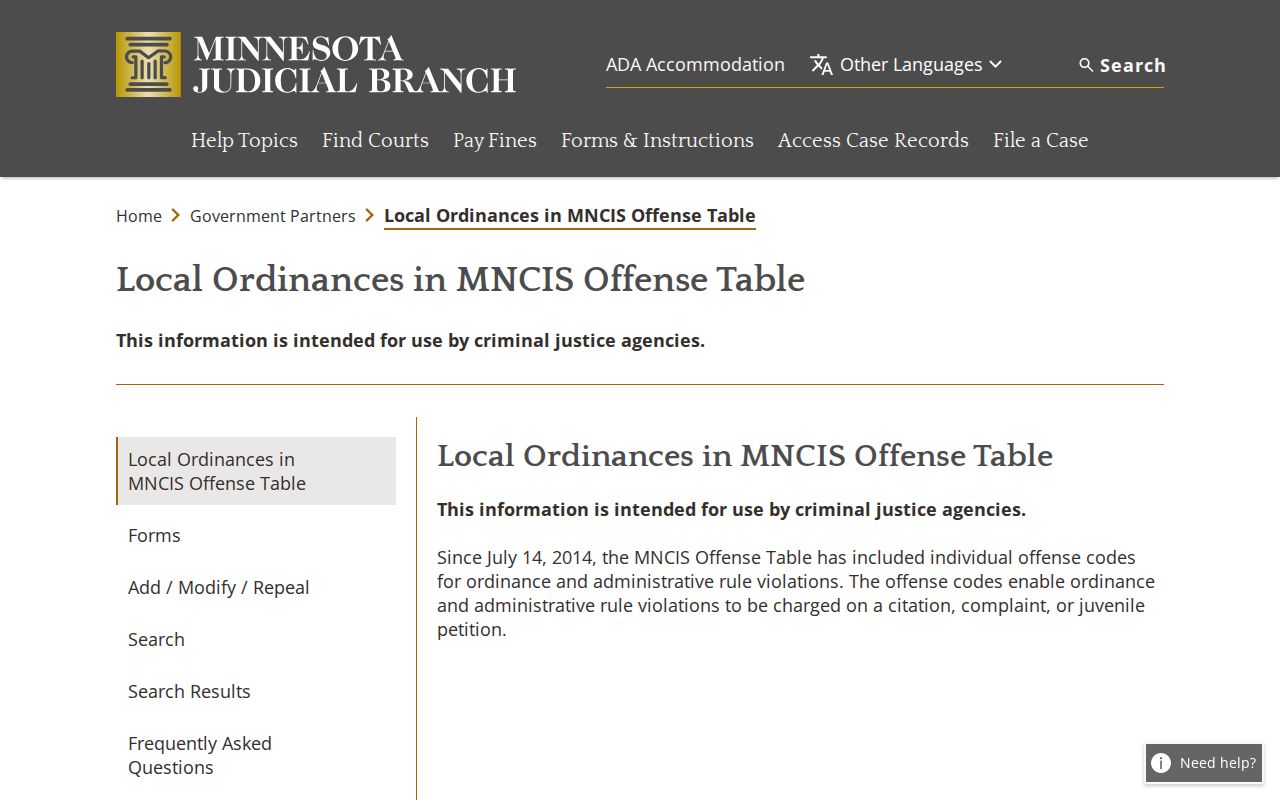
Local ordinance information can supply context, but the Polk District Court file remains the court record worth locating.
Polk Conciliation Claim Records
Conciliation Court is a District Court division. It handles qualifying smaller civil claims, the kind people often just call small claims. The state Conciliation Court page caps general claims at $20,000 or less. A Polk conciliation case runs through that same unified court system, with its own procedure and record.
Read a case result with care. Winning is one thing; collecting is another. The court does not guarantee payment. The winning party must pursue the judgment on their own. The register can display case activity, a judgment, and any satisfaction information on file, yet it cannot confirm that collection happened outside what the court record reports.
For the claim limit and how collection works, Minnesota's Conciliation Court resource lays out the details.
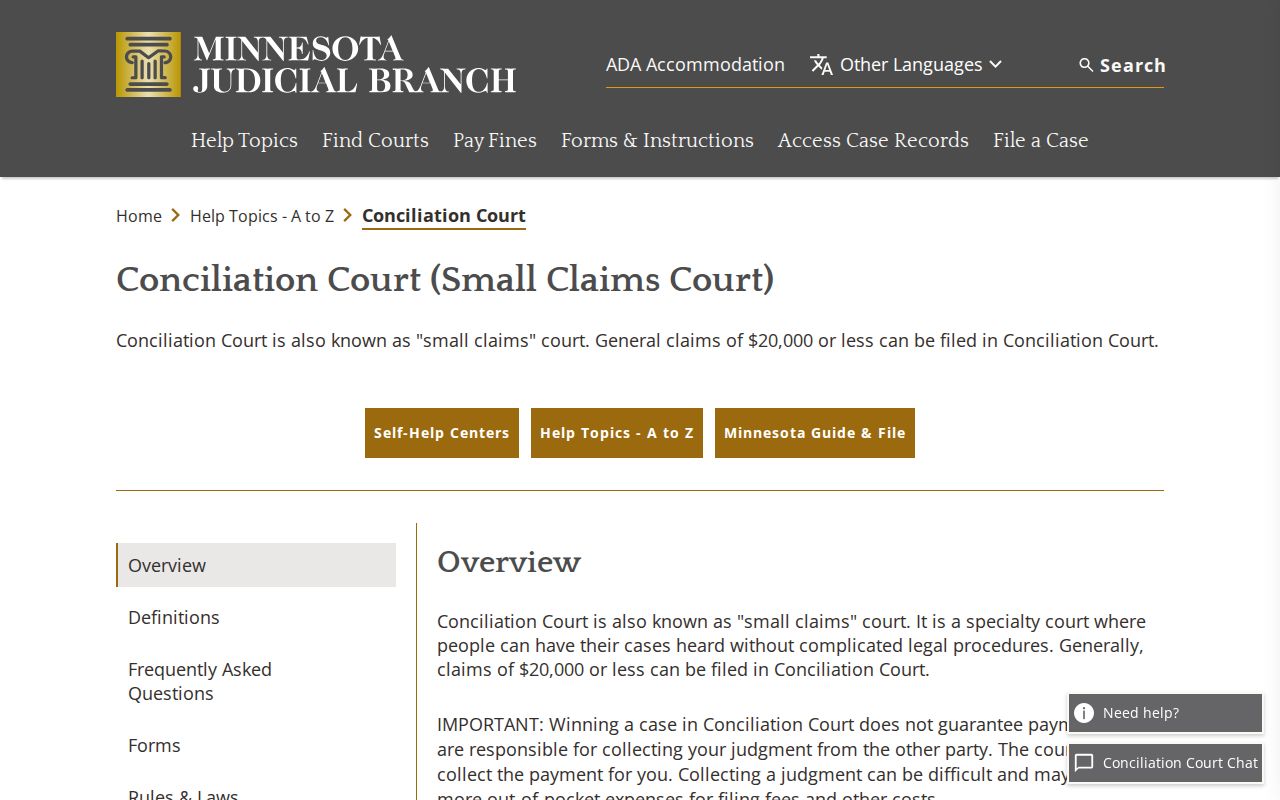
Check the official resource before searching a Polk Register of Actions entry.
Civil Docket Settings and Hearings
For a Polk civil hearing, the docket's newest entry comes first. MCRO's Hearing Search adds more search paths. It accepts Name, Case Number, Judicial Officer, and Attorney searches, along with exact or range hearing dates, category filters, and the Polk County location. The Polk court page posts a weekly public calendar. That calendar confirms public settings.
A reset or continuance means an earlier date changed. It does not keep the old date alive. The Polk calendar appears at 7:00 a.m. each business day and is updated hourly. Printed courthouse calendars are the most current. A missing online listing is never proof of cancellation, so rely on a case-specific notice, order, or judicial direction for the appearance details.
The eFS resources cover filing and service help for anyone using the electronic court system.
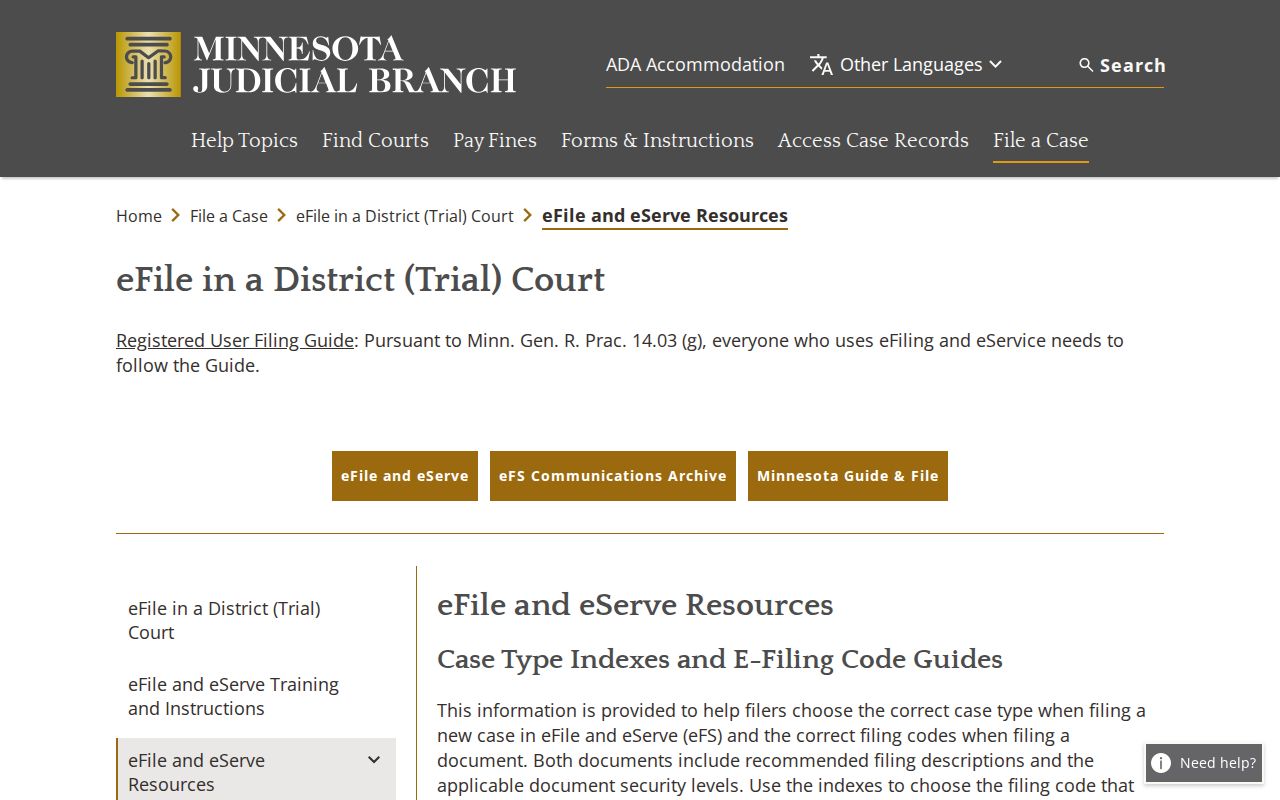
Those filing resources have their place. They never replace the official case notice or the public calendar when you check a Polk civil court date.
Polk Civil Judgment Search Limits
MCRO Judgment Search is not a civil Case Search. It hunts docketed money judgments and any satisfaction information instead. Searches run by debtor name, Person or Business type, an optional Sounds Like match, a docketed-date range, active or inactive status, and a statewide or Polk location. Use it when the question is that narrow.
It is not a full civil-case search. It also says nothing about current finances. Case Search locates the civil Register of Actions. Document Search pulls eligible documents tied to a known file number. Judgment Search keeps its own docketed-judgment job.
A satisfaction entry is useful context, but it belongs with the court's recorded judgment information rather than broad conclusions about the parties. When the full civil history matters, go back to the Polk case number and read the Register of Actions.
Civil Docket Access Rules
MCRO is convenient, but it does not display every public court record. The Judicial Branch puts public terminals at every district courthouse. Paper records stored locally can be requested at the counter. For an older Polk civil file, turn to Court Administration. Use the courthouse terminal or the copy-request process instead. The same goes for an incomplete online result or a certified copy. Never assume the remote result tells the whole story.
Minnesota court-record rules:
Rule 4 begins with access to case records unless an exception applies.
Rule 7 covers identifying information and responses to a records request.
Rule 8 limits remote access more narrowly than courthouse access.
Note: Minnesota Statutes section 13.90 places judicial-branch court records under the Supreme Court access rules. The ordinary Chapter 13 path does not govern them.
Polk Sealed Civil Record Requests
Public access has real limits. Domestic-abuse and harassment protection records, CHIPS matters, certain juvenile records, civil-commitment files, sealed records, and confidential information may stay offline. Older files may list only court-prepared documents. Courthouse access can be fuller. Yet the same confidentiality and sealing rules apply.
For sealed material, the official CON101 confidential-record request asks for the county, court file number, case information, the records sought, the requester's interest, and the reason for access. A judicial officer decides. Need a plain public copy? Polk Court Administration sits at 816 Marin Avenue, Suite 210, Crookston, MN 56716, phone 218-281-2332, open Monday through Friday, 8:00 a.m. to 4:30 p.m.